
Is My Cat Fat or Fluffy? How Can I Tell if My Cat Is a Healthy Weight?
Wondering if your cat is a healthy weight? Learn how to check your cat’s body condition, recognise signs of being overweight or underweight, and how to support a healthy weight feline friend.
A note about this information - disclaimer: This blog is for general information only and is not veterinary advice. Shropshire Cat Rescue cannot provide veterinary advice or diagnose health conditions. If you are concerned about your cat’s weight or wellbeing, please consult your vet.

Maintaining a healthy weight is important for your cat’s long-term health. Yet many owners aren’t sure what a healthy cat should actually look or feel like, especially if they have a long or fluffy coat.
This guide will help you understand how to tell if your cat is a healthy weight, what signs to look for, and when to seek veterinary advice.
Why Your Cat’s Weight Matters
Being overweight can increase the risk of a number of health problems, including:
Diabetes
Arthritis and joint pain
Heart and respiratory problems
Urinary disease
Reduced lifespan
Being underweight can also be a sign of an underlying health problem, dental disease, inadequate nutrition, or another issue affecting your cat’s appetite or ability to maintain weight.
How to Check If Your Cat Is a Healthy Weight
1. Use the Body Condition Score (BCS)
Veterinary professionals use a Body Condition Score (BCS), commonly on a 1–9 scale, to assess whether a cat is either underweight, at a ideal body condition, or overweight.
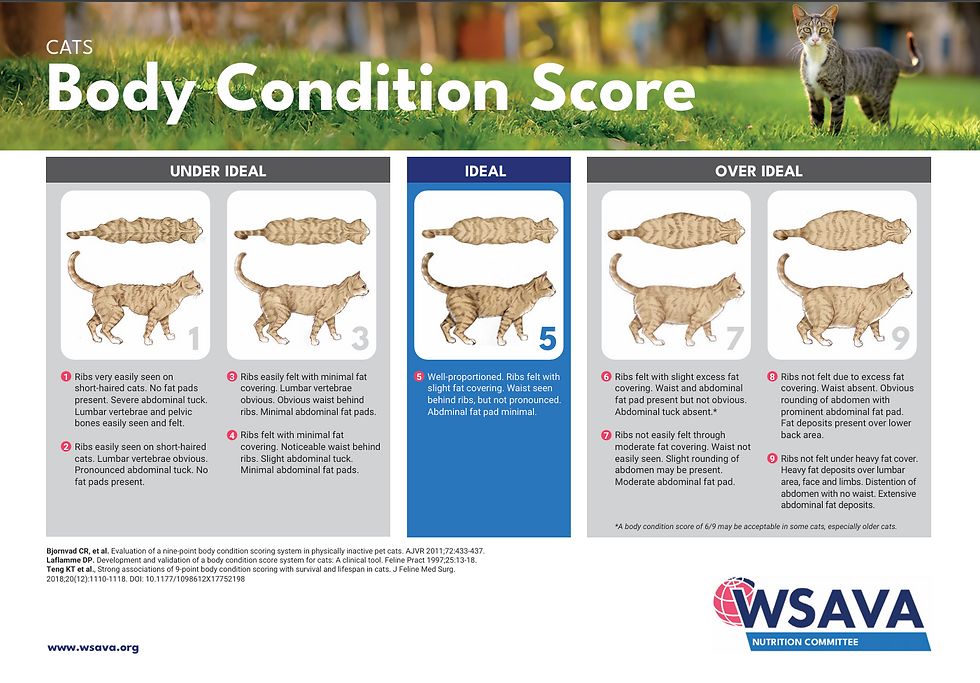
What a Cat at an Ideal Body Condition Looks Like (BCS 5)
Ribs can be felt easily but not seen
A visible waist when viewed from above
A slight tummy tuck when viewed from the side
Only a small abdominal fat pad
You should be able to feel your cat’s ribs with gentle pressure, similar to running your fingers over the back of your hand.
2. Feel, Don’t Just Look
Long-haired cats can look larger or slimmer than they really are.
Gently feel your cat around the:
Ribcage
Spine
Hips
If ribs are hard to feel, your cat may be overweight. If they’re very prominent, your cat may be underweight.
3. Monitor Their Movement and Behaviour
Changes in movement or behaviour can sometimes accompany weight problems, although they can also have many other causes.
Signs your cat may be overweight:
Difficulty jumping, moving comfortably or grooming
Gets tired easily
Less playful or active
Signs your cat may be underweight:
Lethargy
Prominent bones
Poor coat condition
What Is a Normal Weight for a Cat?
There is no single healthy weight for every cat. The ideal weight depends on factors such as body size, breed, age, sex and individual build.
For this reason, your cat’s weight should be considered alongside their body condition. A number on the scales alone cannot tell you whether your cat is underweight, at an ideal body condition or overweight.
For example, a healthy Maine Coon will naturally weigh considerably more than a healthy Siamese. Your vet can help determine your cat’s ideal weight and body condition.
Why Cats Gain or Lose Weight
Common Causes of Weight Gain
Calorie surplus (overfeeding, excessive treats)
Low activity levels (cats with limited enrichment opportunities and play)
Neutering (can reduce energy requirements, so feeding amounts may need to be adjusted)
Common Causes of Weight Loss
There are common weight loss causes but these are not exhaustive.
Reduced food intake or inadequate nutrition
Dental disease
Parasites
Diabetes
Thyroid disease
Kidney disease
Stress
All sudden weight changes should always be checked by a vet as soon as possible.
How to Help Your Cat Maintain a Healthy Weight
Feed the Right Amount
Follow feeding guidance appropriate for your cat and adjust portions with your vet if necessary.
Measure food accurately
Avoid free feeding where appropriate
Give treats in moderation
Choose High-Quality Nutrition
Choose a complete and balanced cat food that is appropriate for your cat’s age, lifestyle and individual needs. If you are unsure which food is suitable, you should speak to your vet.
Rather than judging a food solely by individual ingredients or marketing claims, consider whether it provides the nutrients your cat needs and whether the feeding amount is appropriate for maintaining a healthy body condition.
Foods high in animal protein can help support lean muscle mass. Whereas foods with the right nutrients balance can also support gut and skin health.
Follow the manufacturer's feeding guidance and remember that individual cats may need different amounts. Treats and additional foods also contribute to their overall calorie intake.
Encourage Daily Exercise
Play with interactive toys
Schedule short, frequent play sessions
Use puzzle or ball feeders to slow eating
Provide opportunities for appropriate activity, whether your cat lives indoors or has outdoor access
Monitor Your Cat’s Weight and Body Condition
Weigh your cat regularly at home if practical (using bathroom scales as described below)
Track changes over time
Schedule regular vet checks
One simple way to weigh your cat at home is to weigh yourself first, then weigh yourself while holding your cat. Subtract your weight from the combined weight to calculate your cat’s approximate weight.
If your cat is difficult to handle or becomes stressed, ask your vet about alternative ways to monitor their weight.
When to Speak to Your Vet about Your Cat’s Weight
You should contact your vet if:
Your cat is gaining or losing weight unexpectedly or rapidly
You’re unsure about their ideal weight
Your cat struggles with mobility or grooming
Weight loss occurs despite eating normally
Your cat's appetite has changed
Your cat is drinking or urinating more than usual
Your cat appears lethargic or unwell
Your vet will be able to create a tailored weight-management plan to support you and your cat.

Keeping track of your cat’s weight and body condition can help you spot changes early. If you are unsure whether your cat is at a healthy weight, or if you notice unexplained weight gain or loss, your vet can assess their body condition and advise you on the appropriate diet and activity levels.
Would you like to support our work?
Shropshire Cat Rescue is one of the UK’s largest regional cat rescue and rehoming centres based in Shrewsbury, Shropshire. The charity has been caring for, rehoming and rescuing cats and kittens for over 35 years.
If you found this article helpful, please consider supporting us.
Ways to donate Donate
Sponsor a cat or one of our facilities Sponsorship
Thinking about adopting? Adopt a Cat
A note about this information - disclaimer: This blog is for general information only and is not veterinary advice. Shropshire Cat Rescue cannot provide veterinary advice or diagnose health conditions. If you are concerned about your cat’s weight or wellbeing, please consult your vet.
References:
German, A. J. (2006). The growing problem of obesity in dogs and cats. Journal of Nutrition, 136(7), 1940S–1946S. https://doi.org/10.1093/jn/136.7.1940S
Laflamme, D. (1997). Development and validation of a body condition score system for cats. Feline Practice, 25(5–6), 13–18.
Scarlett, J. M., Donoghue, S., Saidla, J., & Wills, J. (1994). Overweight cats: Prevalence and risk factors. International Journal of Obesity, 18(Suppl. 1), S22–S28.
WSAVA Global Nutrition Committee. (2011). Body condition scoring. World Small Animal Veterinary Association. https://wsava.org/global-guidelines/global-nutrition-guidelines/
Royal Canin Veterinary Advisory Council. (2014). Feline obesity and weight management. Royal Canin.
Image references:
Image 1: Pip: A photo of Pip one of our Retirement Village Residents
Image 2: WSABA (2026) Body Condition Score - Cats [photograph]. World Small Animal Veterinary. Available at: WSAVA_BCSCat_BCSDog_Nutrition_v1_250612 (Accessed: 8th August 2026)
Image 3: A photo of a young black and white cat in Shropshire Cat Rescue care

Comments